%20-%20960X960%20(1).png)
Cheap Landscaping Costs More in the Long Run. - Part 1 Hardscaping


Recently, here in Kingston, I was called in to assess a project that had already been started by a “CONtractor.”
And yes… I’m going to lightly emphasize the con part.
This gentleman had installed roofing tarp underneath the mulch, using it as landscape fabric. When the homeowner questioned it, he explained that it would help “direct the water away.”
Let’s break that down.
Roofing tarp is a waterproof membrane.
It does not breathe.
It does not allow proper water infiltration.
It does not support soil biology.
And for the record — we don’t even use landscape fabric in garden beds. That’s a whole separate conversation.
But using roofing tarp under mulch to “direct water” isn’t just a shortcut. It’s a misunderstanding of how soil systems work.
At that same property, paver stones were laid directly on bare soil because, according to him, “they’re heavy enough to compact the ground.”
Stones are not magic.
Gravity is not compaction.
And now this homeowner is looking at tearing out brand new work.
This is exactly why cheap landscaping costs more in the long run.
The Base Is Everything (Even If You Never See It)
In Ontario’s freeze-thaw climate, the most important part of your patio is the part you’ll never see.

It’s underground.
Proper excavation depth.
The correct granular base.
Compaction in lifts — not one lazy pass.
Accurate slope for water movement.
Solid edge restraint.
When we build according to Fusion Landscaping principles, a significant portion of what you’re paying for is invisible. It’s climate-aware. It’s environmentally responsible. It’s designed for long-term performance.
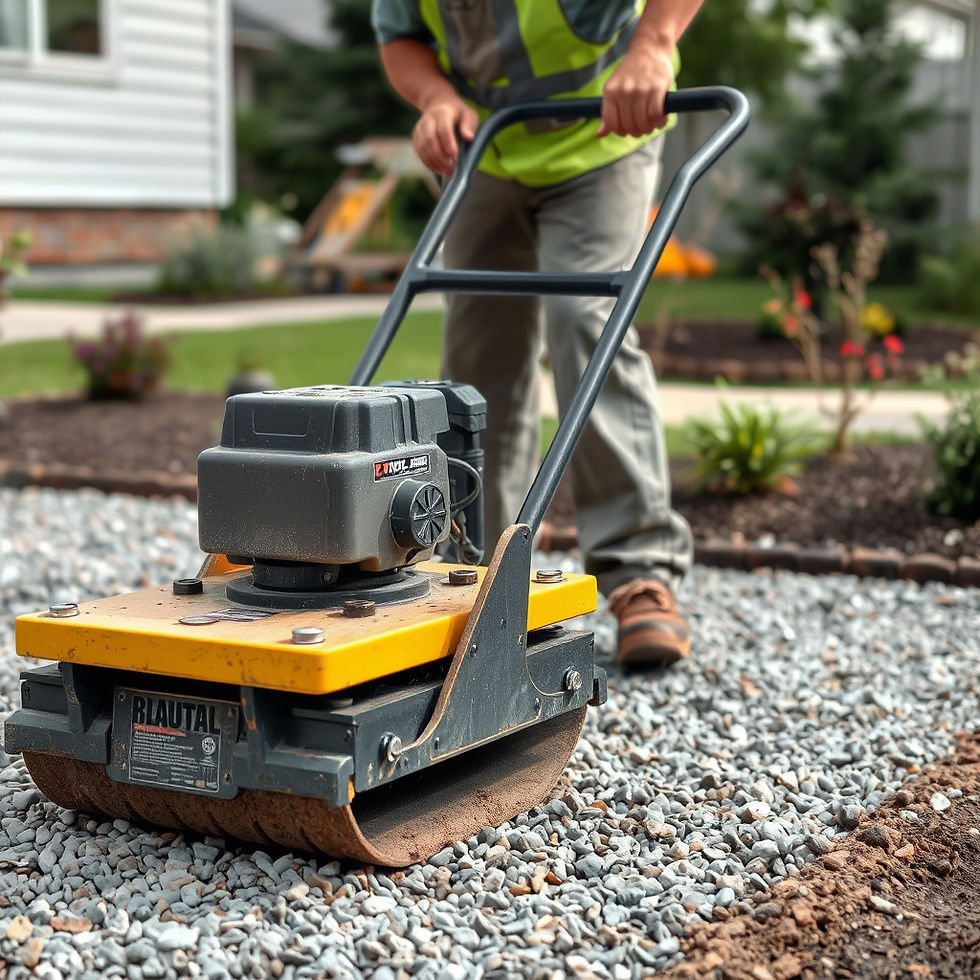
You won’t see that base once the pavers go down.
But you will absolutely notice if it wasn’t done properly — usually after one or two winters.
If you’re considering a patio, walkway, or structural landscape feature, you can learn more about how we approach our builds here:
Waterproof Doesn’t Equal Smart
There’s a difference between “directing water” and understanding how water actually behaves.
Water moves through soil systems.
It infiltrates.
It drains.
It evaporates.
It interacts with roots and microbes.
When you trap moisture with a waterproof barrier under mulch, you’re not solving a problem — you’re often creating one.
In climates like ours — especially here in Kingston and across Eastern Ontario — freeze-thaw cycles magnify installation mistakes quickly.

Shortcuts can sound clever.
They rarely age well.
Fast Install vs. Correct Install
You’ve probably heard it:
“We can do it in a day.”
“We don’t need that much base.”
“We’ve always done it this way.”
Speed impresses on Instagram.
Structure survives 15 Ontario winters.
Proper excavation takes time.
Proper compaction takes effort.
Proper grading takes knowledge.
If one quote comes in dramatically lower than the others, ask yourself where the time is being saved.

Because time doesn’t disappear.
It gets cut from somewhere.
Not All Materials Are Created Equal
On install day, most patios look great.
But two winters later?
Edge restraints start to shift.
Polymeric sand begins to wash out.
Pavers settle unevenly.
Drainage issues appear.
A properly installed hardscape may cost 20–30% more upfront.
Rebuilding it later often costs 100% more.
That includes tear-out, disposal, labour, and the frustration of paying twice.
I rarely get called to admire cheap work.
I get called to fix it.
Hardscapers, Designers, and Plant Knowledge

Here’s something homeowners don’t always realize:
Not every hardscaper understands plants.
Not every designer understands soil systems.
I once corrected a plant plan designed by a hardscape architect where the majority of the suggested plants would not have survived the actual site conditions — too wet, too exposed, too dry, or simply the wrong scale for longevity.
The homeowners had paid good money for that design.
If your project includes hardscaping and planting, ask who is choosing your plant material — and what their background is.
If you want your landscape to thrive for 10, 15, 20 years — not just look good for the first summer — that knowledge matters.
And yes, that level of knowledge often costs a little more.
You can read more about our approach and philosophy here:
Fusion Landscaping: The Hidden Work That Matters
Fusion Landscaping focuses on climate-conscious installation and long-term performance.

That means:
• Understanding freeze-thaw cycles
• Managing water movement properly
• Building structurally sound bases
• Respecting soil systems
• Thinking environmentally and sustainably
Most of that work is buried underground.
But that’s the part that protects your investment.
Landscaping isn’t just about how it looks on day one.
It’s about how it performs a decade from now.
(And yes — we’ll go deeper into soil systems and the landscape fabric conversation in Part 2.)
Before You Hire a Landscaper, Ask This!
If you’re getting quotes in Kingston or anywhere in Ontario’s climate, here are the questions you should be asking:
How deep are you excavating?
What base material are you using?
How are you compacting it?
Are you installing proper geotextile?
How are you managing water movement?
Who is selecting plant material?
What certifications or formal training do you have?
How will this perform after 10 winters?
If someone can’t answer these clearly and confidently, keep looking.
Cheap landscaping isn’t always obvious on day one.
But it reveals itself.
And I would much rather build it properly the first time than meet you later to tear it out.
Coming Next
👉 Part 2: Why Cheap Gardening & Planting Costs Even More in the Long Run
We’ll unpack soil preparation, plant selection mistakes, overcrowding, long-term maintenance traps — and yes, we’ll revisit the whole landscape fabric myth properly.


Comments